
Ten Years Since
The New York Times
Called Us a Renaissance
On every table at Shiraz Kitchen in Elmsford, between the salt and the pepper, sat a small shaker of sumac.
Most guests asked what it was. I would tell them — tart, dusky, the spice we sprinkle on rice and salads, the spice that finishes a kebab. Some of them would take a pinch, taste it on their fingertip, and look at me differently. Others nodded politely and reached for the salt instead.
On May 20, 2016, a critic named Emily DeNitto wrote a review for The New York Times. She titled it “A Persian Renaissance at Shiraz Kitchen in Elmsford.” She opened it with the sumac shaker.
I read it on a Friday morning at the bar of the restaurant, the way you read something you have been waiting on without knowing you were waiting on it. By dinner that night, the phone hadn’t stopped. By the next weekend, we were three weeks deep on reservations.
She didn’t know then — none of us did — that she was writing about the beginning of a much longer story.
The Restaurant Was Already Seven Years Old
I had taken over Shiraz Kitchen a little over a year before that review. The restaurant existed. The space existed. What I changed was not the address. I changed what came out of the kitchen.
I expanded the menu. I tweaked recipes I had grown up with. I started running events for Persian holidays — Nowruz, Yalda, Mehregan — for the Iranian-Americans in Westchester who had nowhere to go on those nights. I wanted them to find food that tasted like home. I wanted everyone else to learn what home tastes like to us.
That was the work. The Times noticed.
My Mother’s Name Is Iran
Like the country.
She is in her seventies now. She still cooks. She has never measured anything in her life. She has never written down a recipe.
When I cook with her — I do, still, when I can — I have to watch her hands. The pinch of salt. The swirl of saffron-water into rice. The press of her thumb against the side of the pot that tells her the tahdig is done. If I look away, I miss the lesson.
She can feed fifty people without looking like she is working. That isn’t talent. That is fifty years of doing it. To her, feeding people isn’t work. It’s love made visible. Shiraz Kitchen is built on that.
The first dish I served at the restaurant from her recipes was tahdig. The golden, crispy crust of rice that forms at the bottom of the pot. When I was a child, the smell of it would reach the front door before the dish reached the table. I would know what was for dinner before I had taken off my shoes.
I wanted my guests to walk into the dining room and feel something close to that.
Persian Roots, Mediterranean Branches
People sometimes ask why we call ourselves Persian-Mediterranean, not just Persian. The honest answer is that I never saw a line between the two.
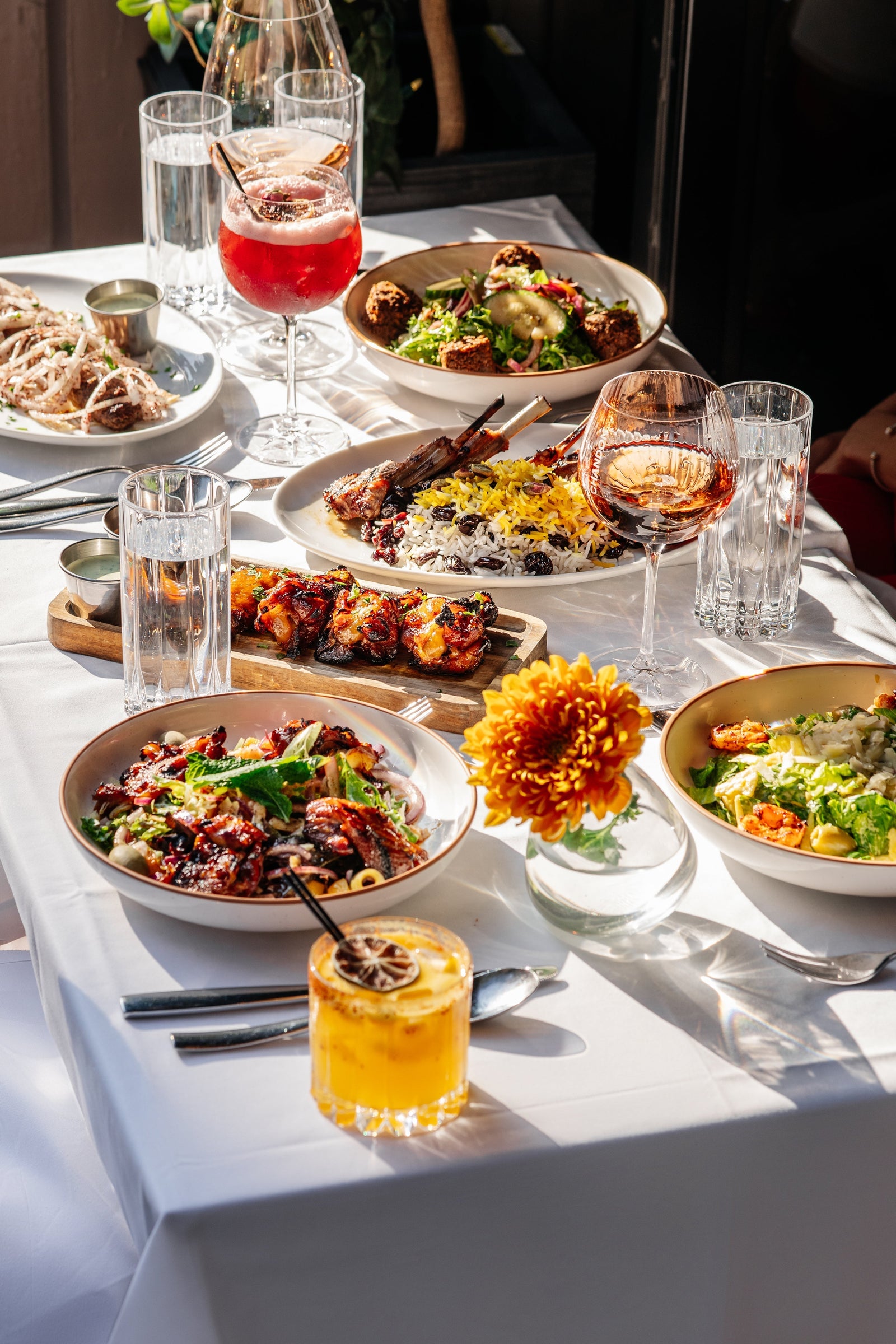
Iran sits at the eastern edge of a culinary world that stretches west through the Levant, around the Mediterranean coast, and all the way to Andalusia. The same lamb. The same herbs. The same olive oil. The same saffron. The same instinct to grill over fire and serve over rice. The dishes have different names from one country to the next — kebab here, souvlaki there, kofta somewhere in the middle — but they grew up at the same table.
When I built the menu at Shiraz Kitchen, I let the menu be honest about that. My mother’s tahdig sits beside grilled branzino with herb oil. Her ghormeh sabzi shares a table with a White Bean and Feta Salad, a Mediterranean crunch, a slow-roasted lamb shank. Different traditions. Same heart.
It also explains the wine. Persian food has no deep traditional wine culture — Iranian wine has its own history, much of it interrupted — but Mediterranean food is unimaginable without a bottle on the table. Once I let the menu cross that border, the wine list followed.
That is where the wine bar came from.
The Wine Bar Bet
By 2018, I expanded Elmsford and built a full wine bar.
People thought I was crazy. A Persian-Mediterranean restaurant with a serious wine list in Westchester County. The skeptics had a fair point — most of our regulars had grown up not drinking wine with their food. Why would I build a room around something my own community didn’t ask for?
But other people were going to. And once they sat down and ordered a glass of Châteauneuf-du-Pape with the lamb shank, they understood what I was after.
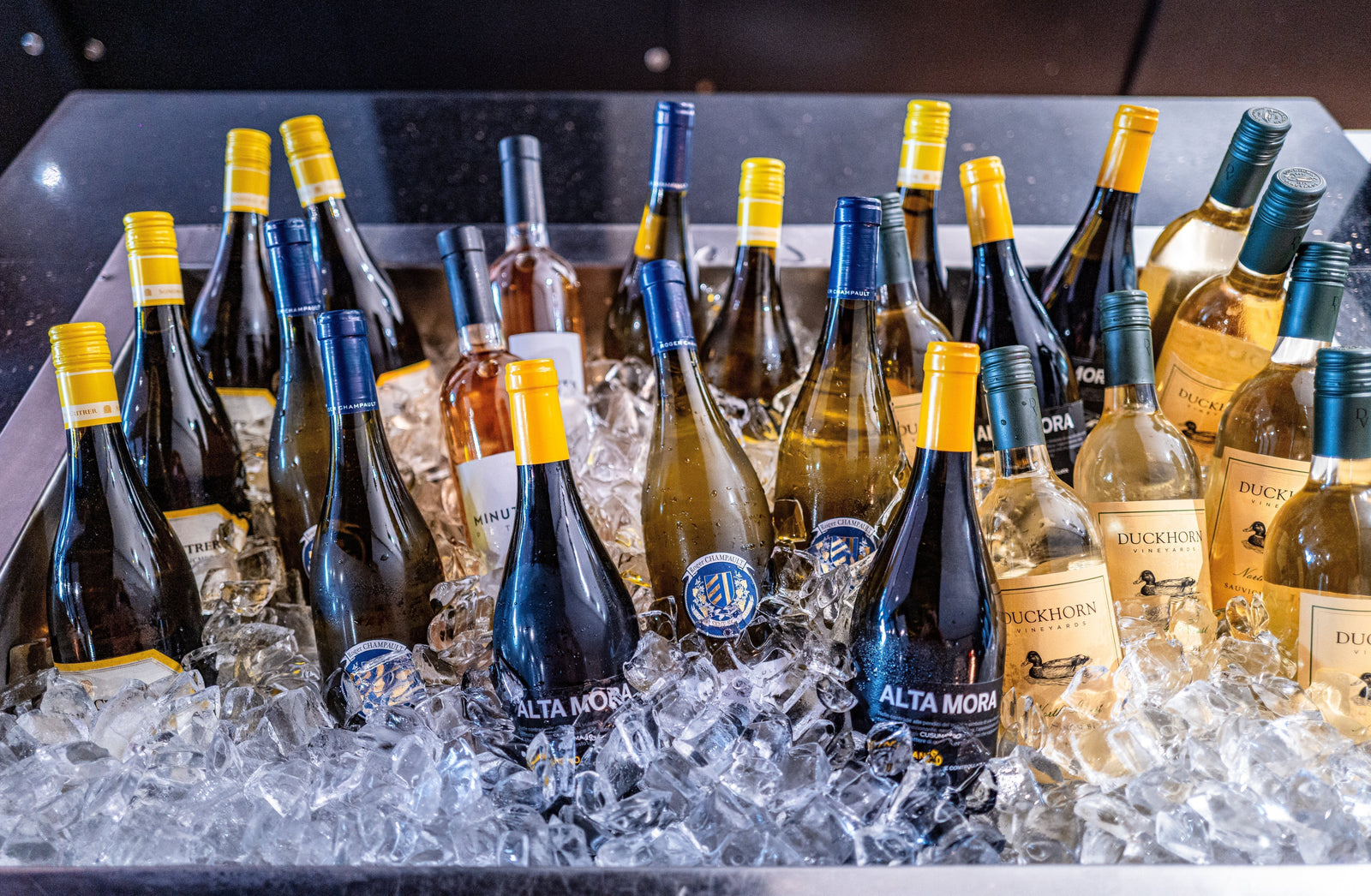
We poured 200-plus bottles. We earned a Wine Spectator Award of Excellence. Three Michelin Bib Gourmand awards followed — 2020, 2021, 2022.
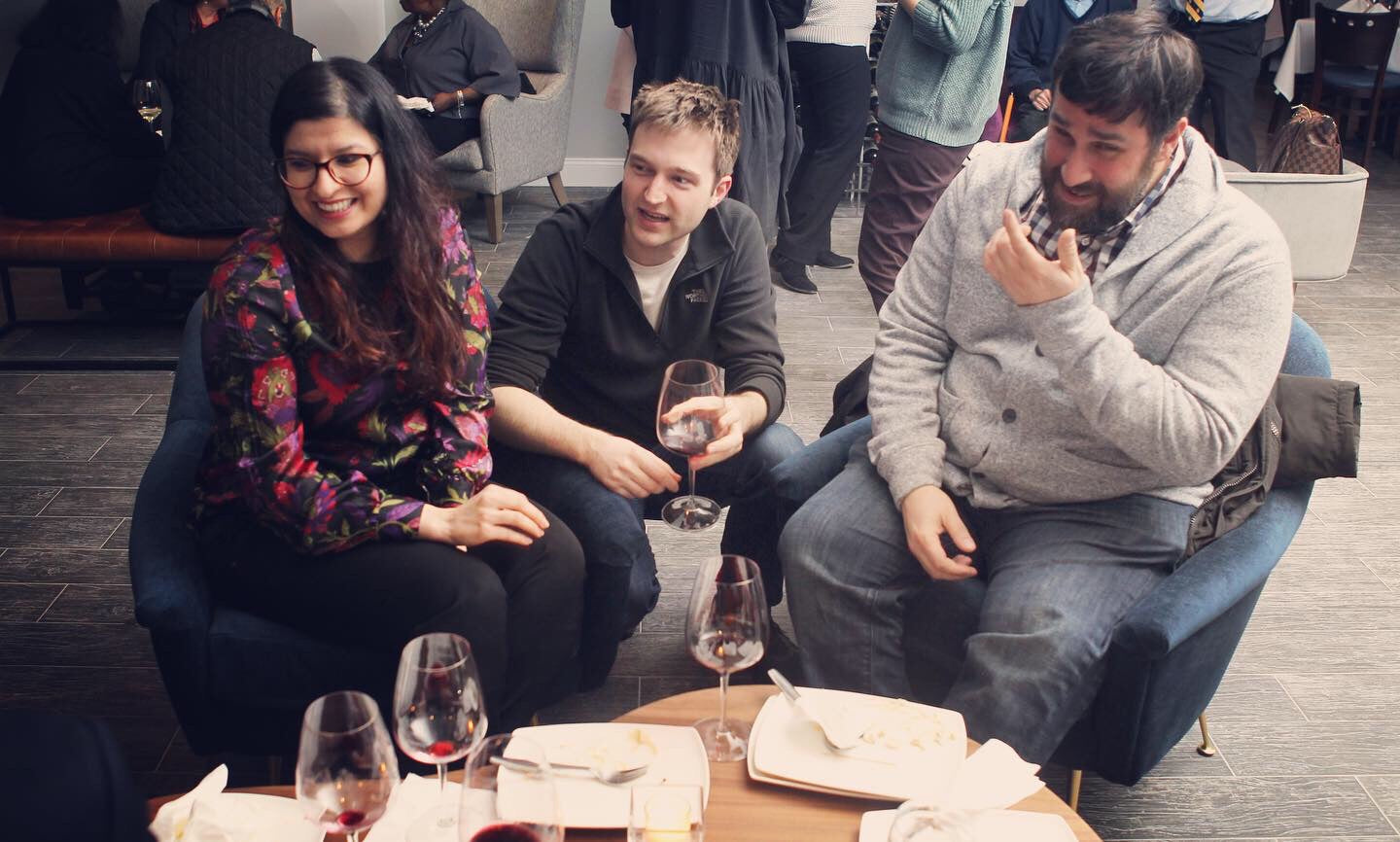
The wine bar room itself was small. Deep navy chairs. An orange velvet sofa we had argued about for a month before buying. A heavy black-framed mirror that hung over the banquette — I used to catch the angle of every Friday night in it, the whole room over my shoulder. The wine shelves stood floor to ceiling along the back wall: Almaviva, Opus One, Ceretto, Château Batailley, Marqués de Riscal. The Caymus crates we used as risers.
The room was full. Every night, for years. Couples on date nights. Friends sharing small plates and a bottle they had been saving for an occasion that finally came. Regulars who knew which corner caught the evening light just right.
That room was the proof that the bet was the right one.
Chelsea, March 2020
Even before the wine bar took off in Elmsford, I had signed a lease in Chelsea. A second location. In Manhattan. I was supposed to open in mid-March of 2020.
The state shut everything down before we opened the doors.
I had a restaurant ready to serve a city that had gone silent. I stood in the empty Chelsea dining room one afternoon in late March — chairs stacked on tables, no staff, no kitchen, no sound from outside — and I thought: what kind of business am I still running?
I spent that spring watching the news. Calling staff. Trying to figure out what version of the plan still applied.
We finally opened Chelsea that November, in a city that was still quiet. Nothing about it looked like the grand opening I had planned. The dining room was at reduced capacity. The reservation book was thin. The street outside was thin too — Chelsea in the fall of 2020 was nothing like Chelsea in any year before or since.
We served whoever came. We adjusted what we could. We made it work.
That winter, more people started to come back. By spring 2021, we had a Chelsea regular crowd. Some of them are still our regulars now.
The Fire
It was 3 AM when the call came.
A man from the building next door — the print shop — was on the line. There was a fire. He didn’t think it was bad yet. He just wanted me to know.
By the time I drove up to Elmsford, you could see the smoke from the highway.
The fire didn’t start at our restaurant. It started in the print shop, in some piece of equipment that should have been off, jumped to the wood between the two buildings, and worked its way through both of them by morning.
I stood outside on Main Street, with the air still warm from the engines, and watched the building come down.
Years of work. The 200-plus-bottle wine collection — some of it irreplaceable. The room we had built. The black-framed mirror I had been so proud of. The orange velvet sofa we had argued about. The Caymus crates. The Almaviva and the Opus One and the Ceretto.
All of it gone, in the time it took for the sun to rise.
“Did You Wake Up This Morning?”
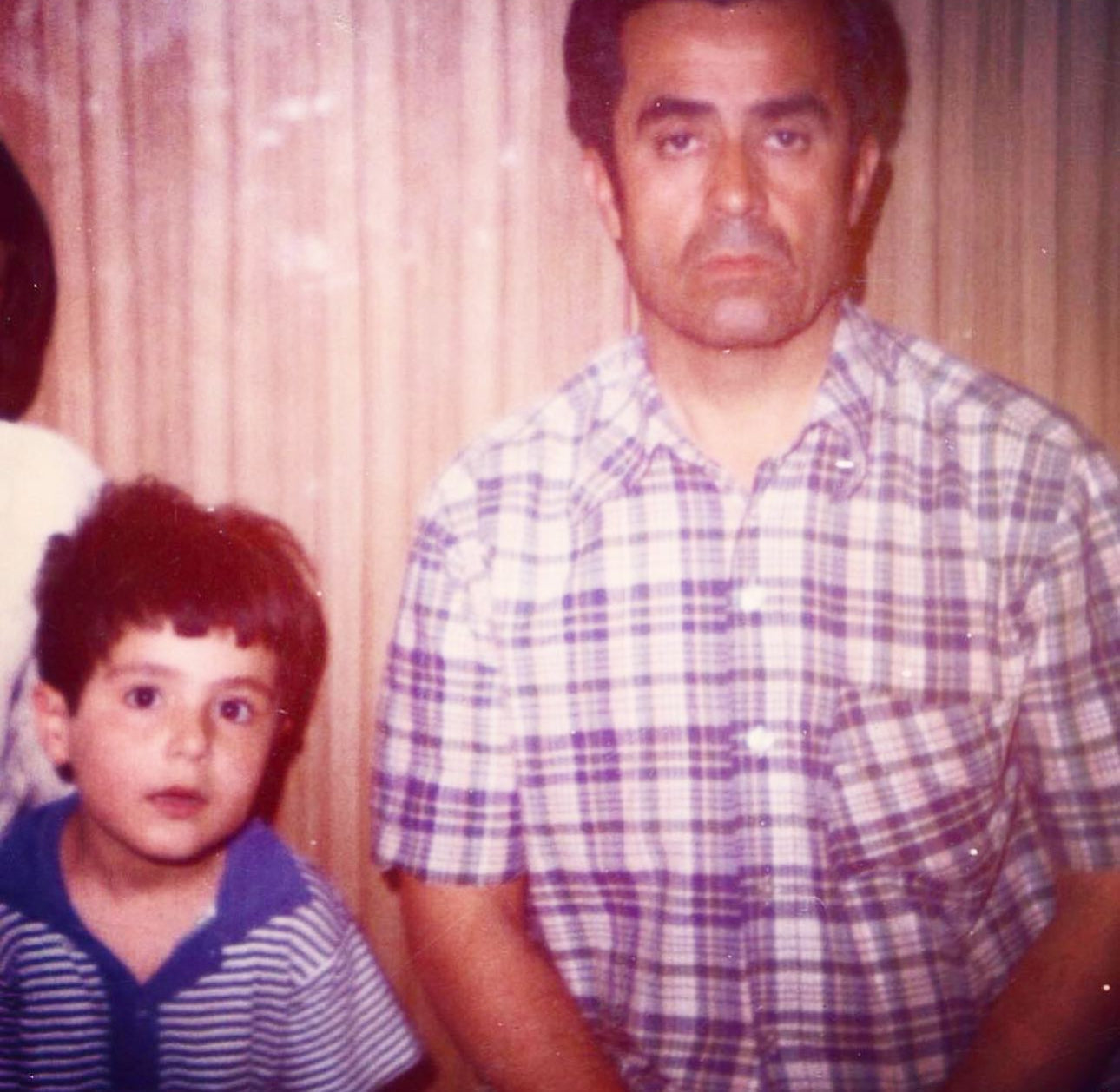
My father lost everything, financially, twice in his life. I knew this. We had spoken about it. He didn’t talk about it like a story. He talked about it like the weather.
Whenever I came to him with my struggles — and there were many, even before the fire — he would ask me one thing.
“Did you wake up this morning?
Then you’re lucky. So many people didn’t make it today.”
— My father
That was his answer to every problem. To loss. To failure. To the moments I thought I could not keep going.
He was right every time.
Standing in front of that burned building, I thought about him. I thought about the people who had built the restaurant with me — staff who had given me their best years, who were now looking at me waiting to hear what came next. I thought about my mother’s recipes, and how no fire could touch them, because they live in my hands.
The building was gone. The work was not.
White Plains, April 27, 2023
Eight months later we reopened. Not in Elmsford — in downtown White Plains, eighty Mamaroneck Avenue.
I remember the first guest. A woman in her sixties, who had eaten at Elmsford for years. She didn’t have a reservation. She didn’t need one — we recognized her at the door. The hostess walked her to a four-top by the wine racks and pulled out her chair.
She looked around at the new room. New tile. New wood. New wine racks already half-stocked. And she nodded.
She said: “You’re back.”
I told her: “We never left. We just moved.”
New building. New dining room. Same Persian-Mediterranean menu. Same philosophy. The Bib Gourmand stayed. The recipes stayed. Everything that mattered stayed.
We added a sushi program at White Plains, something I had been thinking about for a long time. People surprised me — they came for the Persian-Mediterranean food and stayed for the sushi, or came for the sushi and discovered the Persian food. Either way, the room filled.
Two Restaurants. One Mother’s Food.
Today, in May of 2026, I have two restaurants. Chelsea on West 17th Street, in Manhattan. White Plains on Mamaroneck Avenue, in Westchester County.
Both serve my mother’s food. Both are built on the simple idea that you treat every guest like family, because that is the only way that makes sense to me.
Ten Years Later
Yesterday, at White Plains, a couple finished their meal at table 9. The husband reached for the sumac shaker without thinking about it. He sprinkled a little more on his rice. He didn’t comment on it. He didn’t notice it. The shaker was just there, where it belonged, between the salt and the pepper.
That is the work of ten years. Not the awards. Not the reviews. The fact that the sumac shaker has become so ordinary at our tables that nobody talks about it anymore.
The room is different. The address is different. The team has grown. But the shaker is still on every table.
Some things do not change.
Ten years. Thank you for sitting with us.
80 Mamaroneck Ave, White Plains, NY · 111 W 17th St, Chelsea, Manhattan



Leave a comment (all fields required)